
Call us now :08045801663
 Send Inquiry
 Send Inquiry
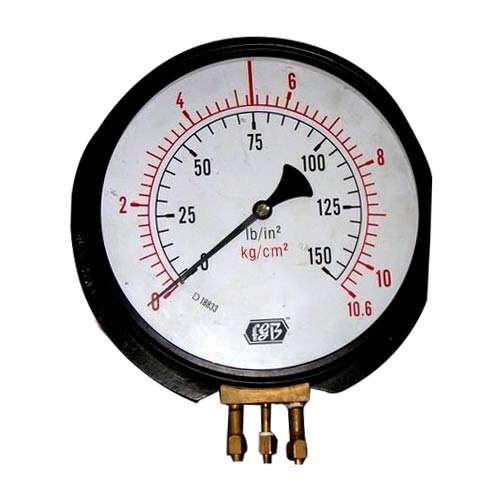
Differential Gauges
Differential Gauges Specification
- Sensor Type
- Mechanical (Bourdon + Capsule) Differential Sensing
- Glass Size
- 100 mm clear safety glass
- Frequency
- Up to 60 Hz (typical response frequency)
- Outer Size
- 110 mm Diameter
- Material
- SS304/316 wetted parts, Aluminum Case
- Working Presssure
- Max 40 bar
- Grade
- Industrial Grade
- Application
- Filter monitoring, Line pressure differential, Clean room monitoring, Hydraulic and Pneumatic systems
- Accuracy
- ±1.6% FSD
About Differential Gauges
Differential GaugesDifferential Gauges are widely used to measure pressure difference from two different ports and indicate the pressure difference on the dial. These products are available in our company with various specifications. These products are manufactured by using good quality of raw material by highly skilled workers. They are used to protect the guage with high temperature vapours. Kindly contact us for more details.
Superior Mechanical Sensing Reliability
Utilizing both Bourdon tube and Capsule mechanisms, this differential gauge delivers precise and stable measurements, ideal for industrial settings where accuracy, durability, and response time are critical. Its mechanical sensing design reduces susceptibility to electromagnetic interference, enhancing reliability across a spectrum of process conditions.
Robust Construction for Industrial Environments
Manufactured with tough SS304/316 wetted parts and encased in aluminum, the device withstands harsh chemicals and physical impacts. The 100 mm safety glass window ensures both operator safety and clear indicator visibility, suited for continuous use in demanding industries.
FAQs of Differential Gauges:
Q: How is the differential gauge installed in hydraulic or pneumatic systems?
A: The gauge is simply mounted at accessible points using standard fittings on systems where pressure differential monitoring is required. Ensure the wetted parts are compatible with the process fluids, and secure the 110 mm diameter gauge within sight for easy reading.Q: What are the main benefits of using a Bourdon + Capsule mechanical differential gauge in industrial applications?
A: This design provides rugged, maintenance-free operation with high accuracy (1.6% FSD), making it suitable for real-time monitoring of filtration efficiency, line pressure drops, and clean room conditions without the need for external power.Q: When should the differential gauge be calibrated or serviced for optimal performance?
A: Calibration is recommended on an annual basis under typical operating conditions. However, in high-frequency applications or critical systems, more frequent checks may be advisable to maintain measurement accuracy.Q: Where can these gauges be effectively utilized?
A: These mechanical differential gauges excel in monitoring filter clogging, compressor line pressure changes, clean room environment pressures, and in both hydraulic and pneumatic system diagnostics across industrial, laboratory, and clean manufacturing settings.Q: What process advantages does mechanical sensing provide over electronic alternatives?
A: Mechanical sensors operate independently of external power and are immune to electrical disturbances, giving them superior reliability in challenging or remote environments where electronics might fail or be impractical.Q: How does the safety glass window enhance operation and user protection?
A: The 100 mm clear safety glass is impact- and shatter-resistant, offering clear views of the dial while ensuring operator safety during pressure spikes or accidental impacts in harsh process areas.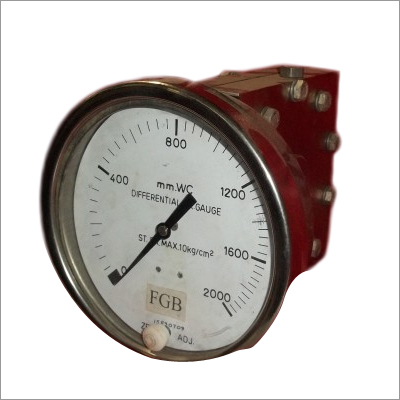
Tell us about your requirement

Price:
Quantity
Select Unit
- 50
- 100
- 200
- 250
- 500
- 1000+
Additional detail
Mobile number
Email

More Products in Vacuum Gauges Category
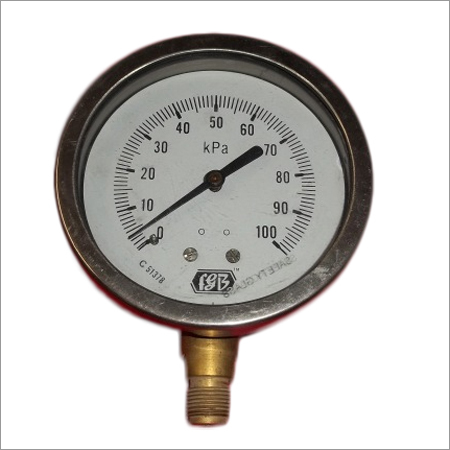
Digital Vacuum Gauges
Outer Size : NA
Case : MS ANS SS
Material : NA
Seal Material : NA
Thread : ALL
Application : Oil Refineries, Chemical Processing, Food And Beverages Industry, Water Engineering, Textile Industry, Marine Engineering, Mechanical Engineering, Petro Chemical Plants, Pharmaceutical Manufacture, Nuclear Power Engineering, Pulp And Paper Industry
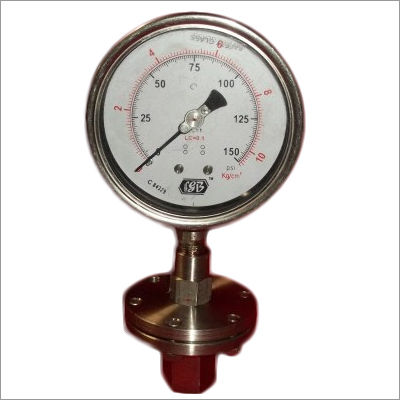
Precision Vacuum Gauges
Outer Size : 100 mm (4 inches)
Case : Stainless Steel / Brass
Material : Stainless Steel / Brass / Phosphor Bronze
Seal Material : Neoprene Rubber
Thread : 1/2 BSP / NPT
Application : Other, Vacuum Measurement in Industrial Equipment
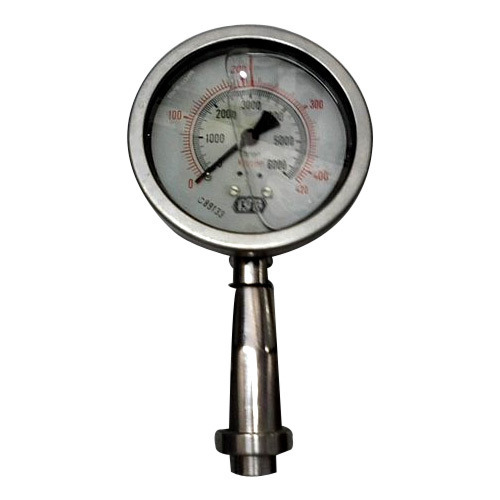
Homogenizer Gauges
Outer Size : 100 mm
Case : Stainless Steel
Material : Stainless Steel
Seal Material : Neoprene Rubber
Thread : 1/2 BSP
Application : Other, Homogenizer Machine Pressure Monitoring
Tyre Pressure Gauge
Outer Size : 63 mm diameter
Case : Steel chrome plated
Material : Metal Body with Brass Connection
Seal Material : NBR Rubber
Thread : 1/8 BSP
Application : Other, Tyre Pressure Measurement for Automobiles

 Send Inquiry
Our Products


C/209-b, Ghatkopar Industrial Estate, 2nd Floor, L.b.s. Marg, Ghatkopar (W),Mumbai - 400086, Maharashtra, India

Mr Vinesh F. Doshi
(Proprietor)
Mobile :08045801663
 Send Inquiry
 Send SMS
Developed and Managed by Infocom Network Private Limited.
